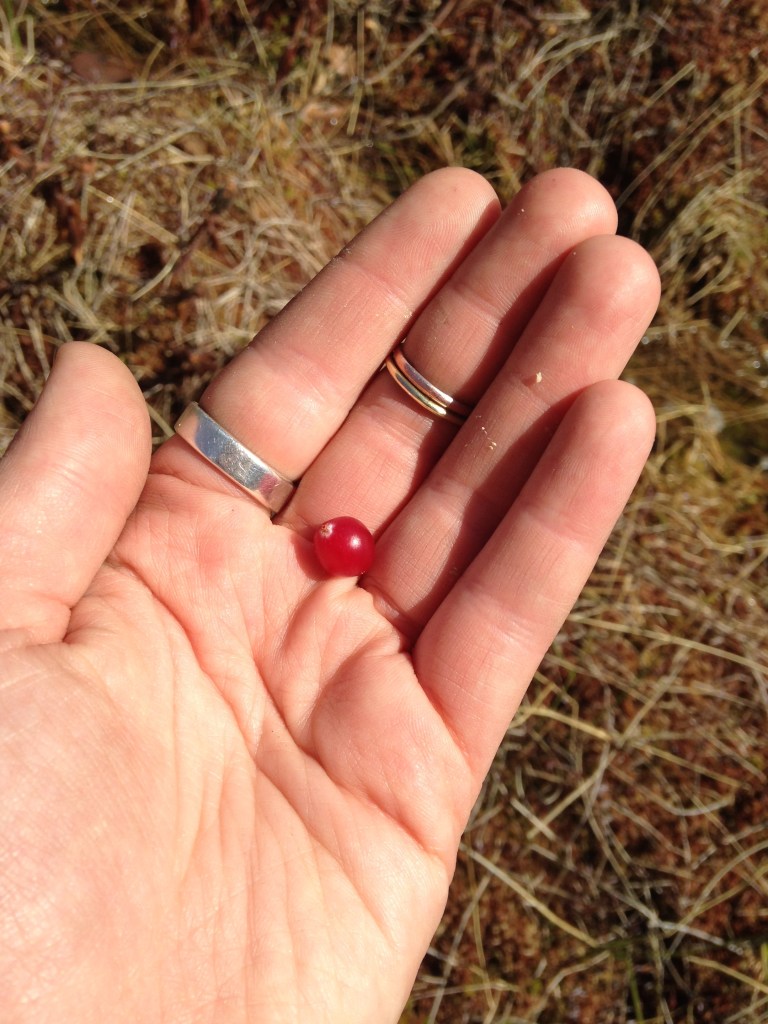
As the ice disappears in the Northland and everything begins to green, one of my favorite places to explore new growth and look for signs of spring is the bog. Up in the Aitkin area of Minnesota I am surrounded by vast peatlands characterized by the colorful sphagnum moss and forests of tamarack and black spruce. With the onset of spring, the bog wetlands also thaw and the unique plants of peatlands begin to appear.
Due to their formation and make up, bogs (one of Minnesota’s three types of wetlands) are a unique and interesting ecosystem. Bogs or peatlands occur through northern coniferous biomes. In Minnesota bogs cover over 6 million acres and occupy land in the Northwest, Red Lake peatlands, and east over to Aitkin County (John R. Tester, Minnesota’s Natural Heritage). These vast expanses of peatland, the largest in the lower 48, formed when the glaciers that shaped much of Minnesota’s landscape retreated about 10,000 years ago. After the glaciers retreated and the climate warmed, large lakes were left in their stead i.e. Glacial Lake Agassiz and Glacial Lake Aitkin.
With continual warming the lake beds dried resulting in expansive prairie and grasslands. A few thousand years later, the climate became cooler and wetter, resulting in ecological change. The prairie of the lake bed became cold, coniferous forest with deeper wetlands. The basins of these large, glacial lake beds provided little drainage to the wetlands and the cold climate slowed decomposition. So, as plants died or shed, the plant matter settled to the bottom of the lake basin and continued to build up over time, creating peat or compacted, dead pant matter.
After thousands of years of filling in and peat build up, these shallow lake basins fill in and collect water within the peat to form a wetland bog. The water in the sponge like peat is cold, has a low oxygen content, and is acidic (Tester). Decomposition is still slow, bacteria do not fare well, and nutrients are not abundant. Thus, a bog is a difficult ecosystem and habitat for many plant species. However, the plant species which have adapted to the harsh conditions of the bog ecosystem are pretty neat indeed.
Below is an early spring adventure of mine on the bog. Many of these plants are common in peatlands and there are some more rare which I haven’t seen yet listed below.
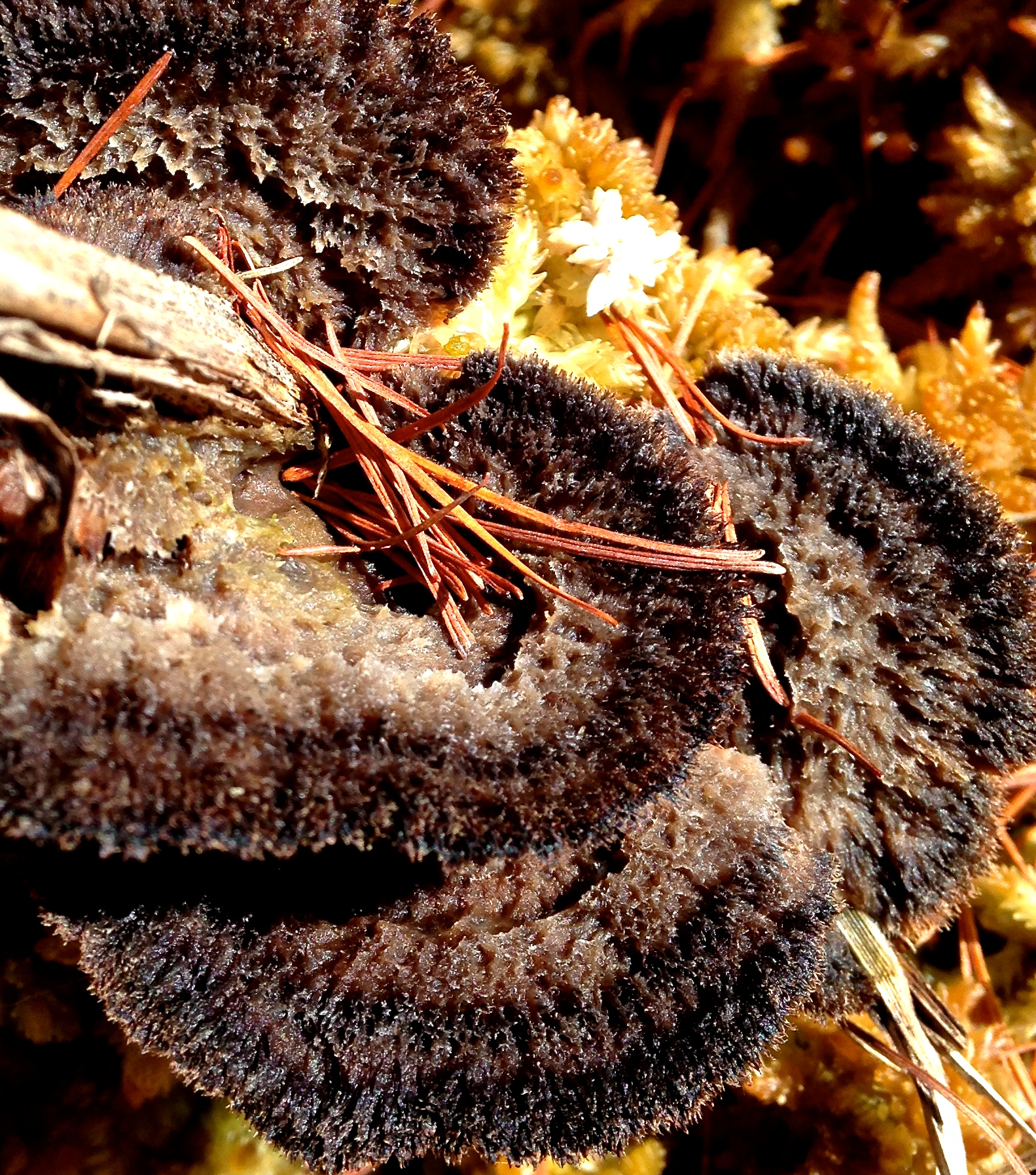
Cool Fungus on the bog. I do not know my mushrooms, this one seems upside down, but I have no idea the species, etc.
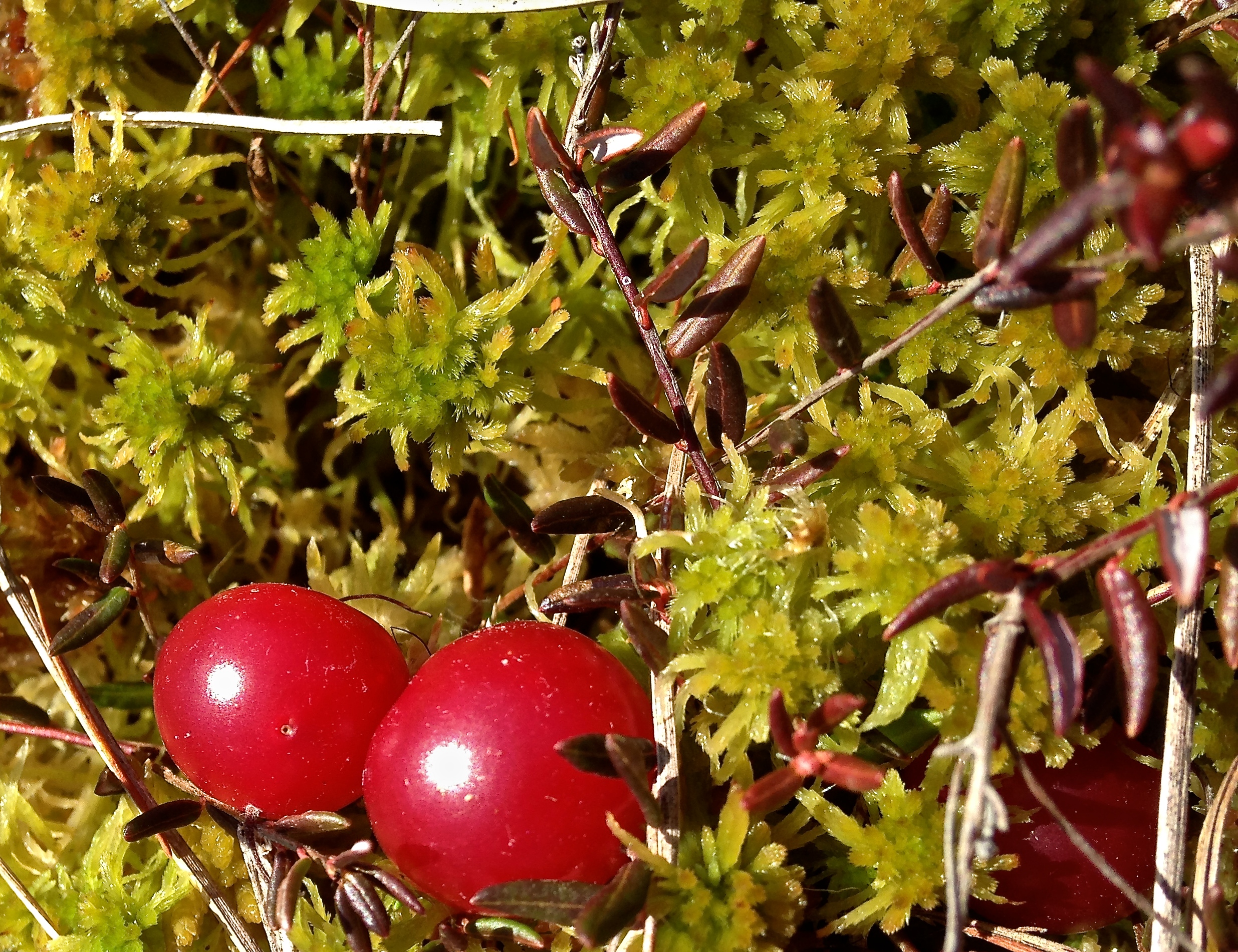
Last season’s cranberry fruit (still taste good) among the bog characterizing plant, Sphagnum moss. Sphagnum moss has cool antibiotic properties and was used for bandaging in WWII (in England and other places with peat) when supplies ran low. Also, the water you can squeeze out of the moss is okay to drink!
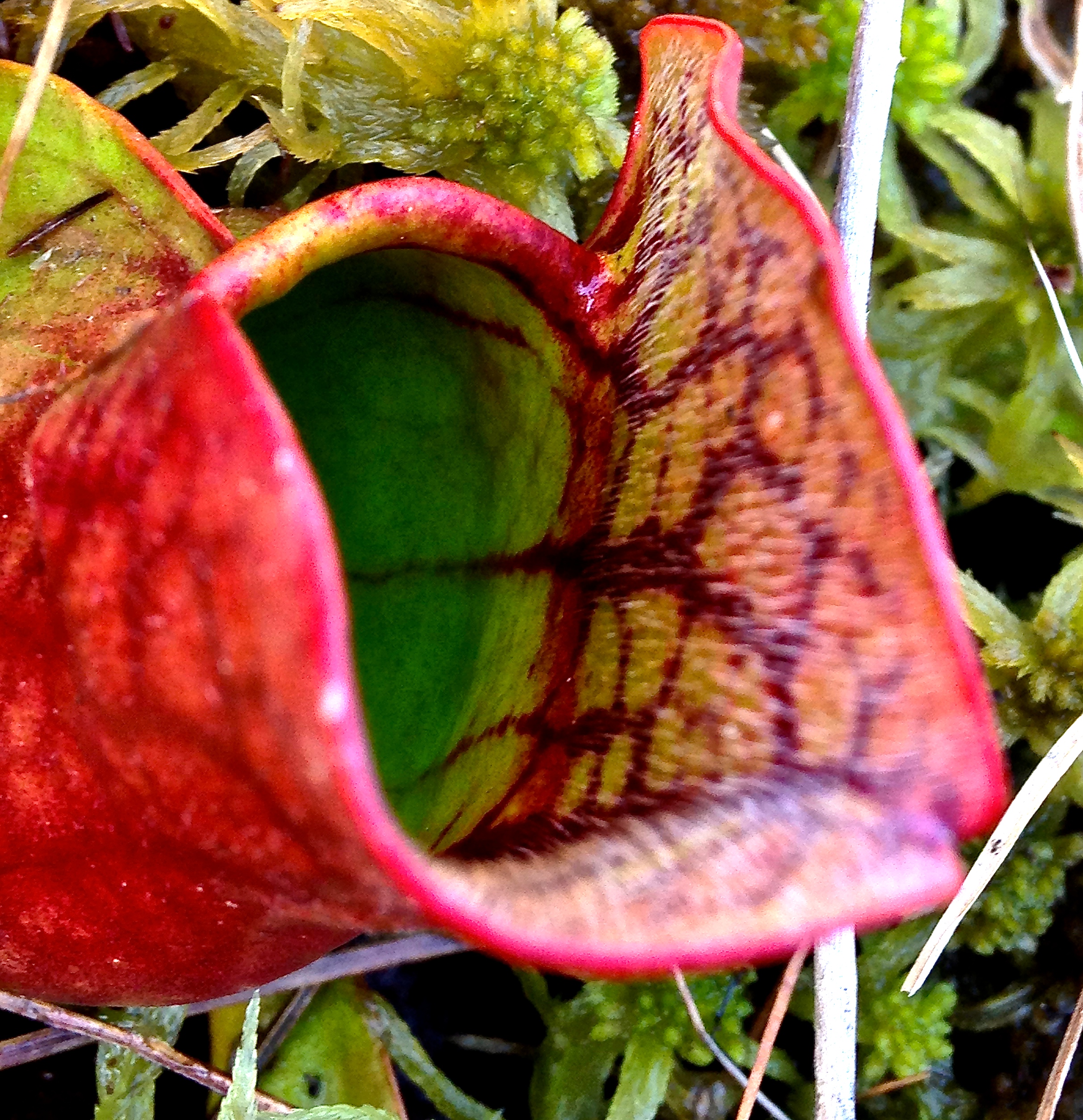
Pitcher Plants coming up on the bog. 1 of 2 carnivorous plants on the bog (other is the sundew). Cool adaptations to get nutrients that the substrate of the bog does not supply:
Pitcher to capture trap insects- small hairs growing downward keep insects from escaping. Plant digest and absorbs insects in pitcher part.
Odor of rotting and lines like weans to attract prey.
Other plants to find on the bog:
Tamarack
Black Spruce
Cotton Grass
Lady Slippers (on the edge)
Marsh Marigold
Bog Laurel
Bog Blueberry
Leatherleaf
Labrador Tea
Overall, the bog is great place to explore and think about earth/environment history. Being a wetland and harsh environment, it is easy in Minnesota to find unaltered expanses of bog and peatland. Although some places are harvested and used, others remain untouched. I recently asked a local geologist about the specific bog and place I visit-an unaltered parcel at the conservation center. I wanted to know how old the substrate is I am walking on as peat is not fully decomposed and succession is slow, I was guessing pretty old…He told I could be walking on plant matter from 25,000 years ago and that is pretty darn cool!


 MN Naturalist